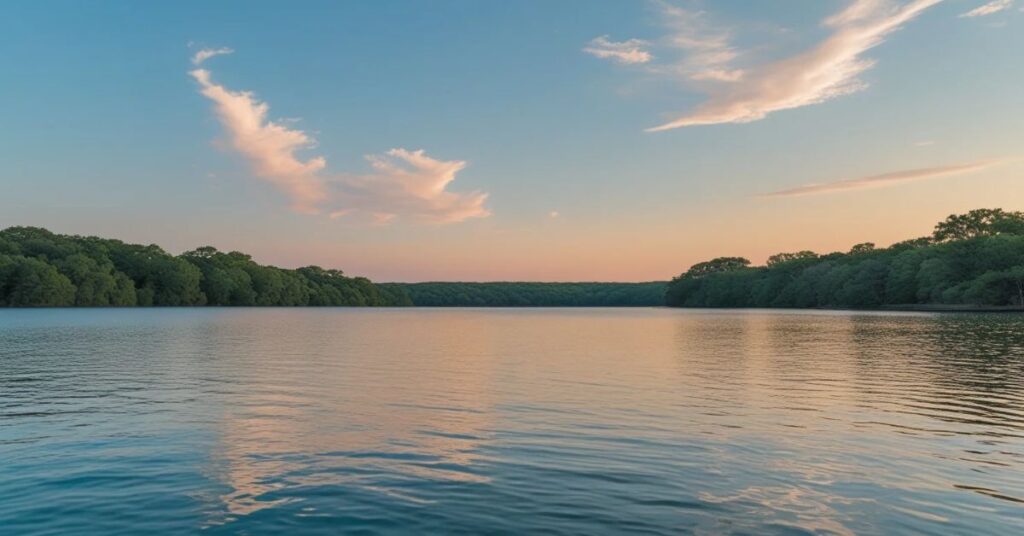
When we talk about places, we usually don’t think much about capitalization. It feels like a grammar rule, something small and technical. But every once in a while, a name grows beyond grammar and turns into an identity. That’s exactly why Lake Texoma should be capitalized. It isn’t just a body of water. It’s a regional symbol, a tourism anchor, a shared pride point, and a unifying brand that connects communities across borders.
Because Lake Texoma sits at the intersection of jurisdictions, cultures, and local economies, state parks and county tourism boards treat it as one unified name and one shared experience. Capitalizing it is not about formality. It’s about recognition.We believe this matters, and in this article, we explore why.
Quick Look at the Idea
Lake Texoma should be capitalized because it functions as a proper noun with cultural, economic, and geographic significance. Despite crossing state lines and county boundaries, it is treated as one destination, one brand, and one identity by the people who live around it and the visitors who return year after year.
Why Names Matter More Than We Think
Names carry weight. They shape perception. When we capitalize a place, we signal that it matters. Think about how different “a lake” feels compared to “Lake Texoma.” One sounds generic. The other sounds established, intentional, and important.
Capitalization tells readers, travelers, and locals that this place has a story. It tells search engines, marketers, and publishers that the name represents a specific destination, not a vague concept.We capitalize cities, rivers, and regions because they are unique. Lake Texoma belongs in that same category.
Lake Texoma Is Not Just Any Lake
Lake Texoma is a defined, recognized place with clear boundaries, history, and meaning. It is referenced in travel plans, fishing stories, family traditions, and regional planning. People don’t say, “We’re going to a lake somewhere near the border.” They say, “We’re going to Lake Texoma.”
That distinction matters.It has campgrounds, marinas, state parks, annual events, and local businesses that rely on its name. When a place reaches that level of recognition, capitalization becomes natural, not optional.
Crossing Jurisdictions but Staying United
One of the strongest arguments for capitalizing Lake Texoma is the way it crosses boundaries while remaining unified. It touches multiple states and counties, yet it is treated as a single destination.
Normally, crossing jurisdictions fragments identity. Different rules, different tourism offices, different signage. But Lake Texoma resists that fragmentation. State parks on different sides of the lake still reference the same name. County tourism boards promote the same experiences. Event organizers market to the same audience.This shared usage turns Lake Texoma into a unifying brand rather than a divided resource.
A Shared Brand in Tourism and Travel
Tourism thrives on clarity. Visitors want to know where they’re going and what to expect. Capitalizing Lake Texoma helps deliver that clarity.When brochures, websites, signs, and guides all use “Lake Texoma,” they reinforce a single mental image. It becomes easier to remember, easier to recommend, and easier to trust.
From cabins and fishing guides to restaurants and festivals, businesses rely on the strength of that shared name. Capitalization reinforces professionalism and legitimacy. It tells visitors this is not a random stop. This is a destination.
How Capitalization Shapes Perception
Language influences emotion. A capitalized name feels official. It feels respected. When we see “Lake Texoma,” we subconsciously place it alongside other major landmarks.
Lowercase usage, even when unintentional, can dilute that perception. It can make the place feel temporary or informal in a way that doesn’t match reality.We capitalize it because people already treat it as capital-worthy in their minds.
A Cultural and Social Anchor
Beyond tourism, Lake Texoma functions as a social anchor. Families return year after year. Friends plan reunions around it. Anglers share stories that begin with the name itself.
In conversations, the name stands alone. No explanation needed. That’s a hallmark of proper nouns. If a name carries meaning without extra context, it has earned its capital letters.Capitalization becomes a reflection of lived experience.
The Role of State Parks and Local Authorities
State parks and county tourism boards play a major role in shaping how a place is presented. Their choice to consistently use “Lake Texoma” with capitalization is intentional.
They understand that consistency builds trust. It helps align messaging across jurisdictions. It avoids confusion and reinforces a shared goal of promoting the region as one cohesive experience.This official usage sets a standard that others naturally follow.
Digital Visibility and Modern Branding
In the digital world, capitalization isn’t just grammar. It’s branding.Search results, maps, listings, and social media posts all benefit from consistent naming. When everyone uses “Lake Texoma,” it strengthens recognition and discoverability. It helps algorithms understand that people are talking about the same place.While we aren’t relying on technical arguments here, it’s clear that modern visibility rewards clear, unified naming.
Why Lowercase Undermines the Identity
Using “lake texoma” in lowercase can unintentionally signal that the name is generic or informal. It strips away the sense of place that has been built over decades.Lowercase works for general descriptions. It doesn’t work for established destinations. When we write about Lake Texoma, we are referring to a specific, well-known location with a shared identity.Capitalization protects that identity.
A Name That Carries Economic Weight
Entire local economies depend on Lake Texoma. Hospitality, recreation, retail, and services all benefit from the recognition tied to the name.When a name carries economic weight, it deserves formal treatment. Capitalizing it shows respect for the communities that rely on it and the work they put into maintaining its reputation.It’s a small detail with real-world impact.
Shared Ownership Without Fragmentation
One of the most interesting aspects of Lake Texoma is shared ownership. Multiple states and counties interact with it, but no one claims it exclusively.
Capitalization helps maintain that balance. It allows everyone to refer to the same entity without emphasizing borders or divisions. The name becomes neutral ground, a shared reference point.
That unity is rare, and it’s worth preserving.
Language Reflects How We Value Places
We capitalize what we value. We don’t capitalize casually. When a place earns consistent capitalization across media, signage, and speech, it’s because people see it as important.Lake Texoma has earned that status through use, memory, and meaning.Capitalizing it isn’t about rules. It’s about respect.
Consistency Builds Long-Term Recognition
Consistency is what turns a name into a legacy. When future generations read about Lake Texoma, they will see a capitalized name that signals continuity and importance.Inconsistent naming creates confusion. Consistent capitalization creates confidence.We choose the latter.
Why We Use “We” When Talking About It
Using “we” reflects shared ownership. Lake Texoma doesn’t belong to one voice or one authority. It belongs to everyone who experiences it.Writing about it in a collective tone mirrors the way the lake itself functions as a collective space.We go there. We remember it. We talk about it. We protect it.
Capitalization as a Quiet Agreement
There was no single vote that decided Lake Texoma should be capitalized. It happened naturally, through repeated use and shared understanding.That’s how language evolves. When enough people treat something as important, the language follows.Capitalization becomes a quiet agreement among writers, officials, locals, and visitors.
More Than Grammar, It’s Identity
At the end of the day, this conversation isn’t really about letters. It’s about identity.Lake Texoma represents connection across borders, shared economic goals, collective memory, and regional pride. It stands as a reminder that geography doesn’t have to divide us.Capitalizing the name acknowledges that truth.
Final Thoughts
Lake Texoma should be capitalized because it functions as a proper noun in every meaningful way. It is recognized, branded, shared, and respected. State parks and county tourism boards already treat it as a unifying brand despite crossing jurisdictions.We follow that lead because it reflects reality.
When we capitalize Lake Texoma, we’re not just following a rule. We’re honoring a place that has brought people together for generations and will continue to do so for many more.And that, more than anything, is why the capital letters matter.
Leave a Reply